Modular Kitchen Designer in India | Reedify Modulars
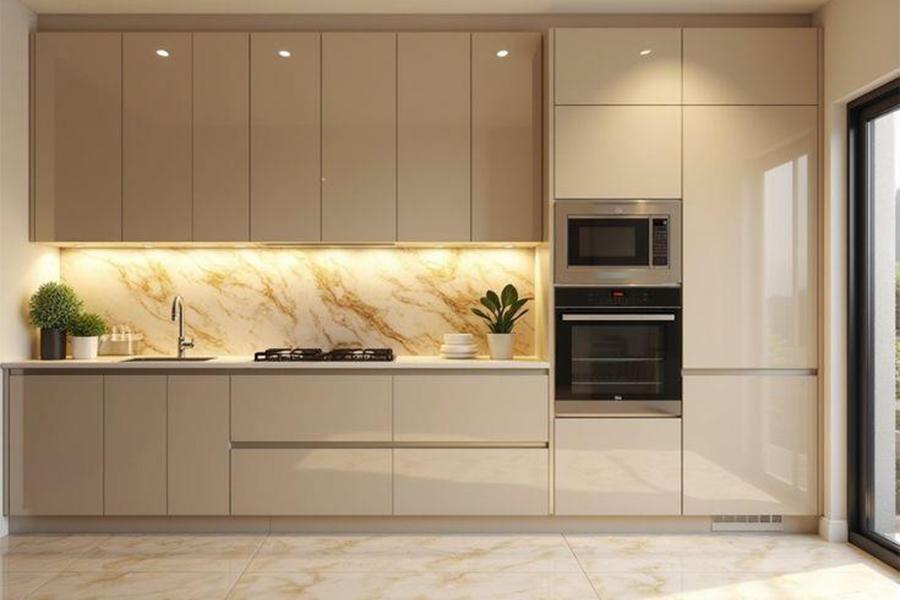
The kitchen is the most used room in any Indian home. It runs early mornings, handles pressure cookers, survives oil splatter, stores 27 varieties of spice, and still needs to look good when guests walk past.
Designing it well is not about copying a European kitchen catalogue. It is about understanding exactly how Indian families cook — and building around that.
At Reedify Modulars, this is the only way we design kitchens. Every layout, material choice, and storage system we recommend starts with one question: does this work for how you actually use this kitchen? This guide covers everything a homeowner planning a modular kitchen in India needs to know — from choosing the right layout to picking materials that survive daily Indian cooking.
What Is a Modular Kitchen?
A modular kitchen is a pre-engineered kitchen system made of standardised cabinet units — called modules — that are manufactured off-site and assembled in your kitchen space.
Unlike a carpenter-made kitchen built directly inside your home, modular kitchens are:
-
Factory-manufactured with consistent quality control at each unit
-
Faster to install — typically 5–10 days versus 4–8 weeks for a carpenter build
-
Customisable — modules are mixed and combined to fit your exact kitchen dimensions and storage needs
-
Replaceable — individual modules can be replaced or upgraded without dismantling the entire kitchen
Every modular kitchen has three core structural elements: the carcass (inner body of cabinets), the shutters (cabinet doors and drawer fronts visible from outside), and the hardware (hinges, channels, pull-outs, and handles). The quality of your kitchen is ultimately the quality of these three things — not just how it looks in a showroom.
Modular Kitchen vs Carpenter-Made Kitchen
This is the decision most Indian homeowners face first — and most make it without complete information.

The key point most homeowners miss: the modular vs carpenter debate is also a materials debate. A carpenter using BWP-grade marine plywood with quality hardware will outlast a modular kitchen using particle board and cheap hinges. The format matters less than the materials and workmanship inside the format.
At Reedify Modulars, our design consultation starts by understanding your budget, cooking habits, and long-term expectations — before a single module is selected.
Modular Kitchen Layouts — Which One Works for Your Home?
Layout selection is the single most important decision in kitchen design. A wrong layout creates problems that no amount of beautiful finishes can fix.
L-Shaped Modular Kitchen
Cabinets run along two adjacent walls forming an "L."
Best for: 2BHK and 3BHK apartments, open kitchen plans, kitchens that connect to a dining area
Why it works: Naturally creates a kitchen work triangle, leaves the rest of the room open, handles both cooking and storage efficiently
Ideal size: 80–120 sq ft
Market share: L-shaped kitchens hold approximately 60% of the Indian modular kitchen market — the most popular layout by a significant margin
U-Shaped Modular Kitchen
Cabinets run along three walls forming a "U," surrounding the cook on three sides.
Best for: Large independent homes, dedicated kitchen rooms, families with heavy daily cooking
Why it works: Maximum counter space and storage, handles multiple cooks simultaneously, eliminates the need to cross the kitchen for anything
Ideal size: 120 sq ft and above
Growth rate: Fastest-growing kitchen layout in India — 25% projected growth through 2029, driven by premium apartment demand
Parallel (Galley) Modular Kitchen
Two parallel counters face each other, creating a corridor-style cooking zone.
Best for: Narrow kitchens in urban apartments, high-efficiency cooking setups, kitchens where a separate cooking and prep zone is desired
Why it works: The most efficient layout for active Indian cooking — two long counters mean you can dedicate one entirely to cooking and one to prep and cleaning
Watch out for: Minimum 4-foot passage width between the two counters — anything narrower becomes uncomfortable with multiple people in the kitchen
Straight (Single-Wall) Modular Kitchen
Everything runs along a single wall in a straight line.
Best for: Studio apartments, small flats, bachelor setups, kitchens used minimally
Limitation: No natural work triangle possible — movement between hob, sink, and refrigerator is linear and less efficient
Cost advantage: The most budget-friendly layout — lower material use and simpler installation
Island Kitchen
A freestanding counter unit (the island) sits in the centre of the kitchen, separate from the wall cabinets.
Best for: Premium homes with very large kitchen areas, open-plan kitchen-dining designs, homeowners who cook and entertain together
Reality check for Indian homes: Requires a minimum kitchen size of 150–180 sq ft to work without feeling cramped. Most Indian apartment kitchens are below this threshold.
The Work Triangle — The Design Principle Every Indian Kitchen Must Respect
The kitchen work triangle connects three points: the hob (cooking), the sink (cleaning), and the refrigerator (storage). These three elements define every movement a cook makes.
The rule: the combined distance of the three sides of the triangle should be between 4 metres and 8 metres. Too small and the cook feels cramped. Too large and every cooking session becomes a workout.
Why this matters specifically for Indian cooking:
Indian cooking involves more active kitchen movement than most Western cooking styles. A typical Indian meal — dal, sabzi, roti, rice — runs multiple burners simultaneously. The cook moves constantly between the hob, the pressure cooker, the sink, and the storage.
A kitchen where the masala shelf is on one wall, the hob is on the opposite wall, and the refrigerator is at the far end is not just inconvenient — it is physically tiring. Over years of daily cooking, a poorly planned work triangle adds up to thousands of unnecessary steps.
At Reedify Modulars, the work triangle is plotted before any cabinet placement is finalised — not after.
Modular Kitchen Materials — What Actually Lasts in Indian Conditions
India's cooking environment is among the most demanding for any kitchen material. High heat, frequent moisture from boiling and washing, oil vapour, and daily heavy use means the material specification matters enormously.
Carcass (Cabinet Body) Materials
BWP-grade plywood (Boiling Water Proof): The gold standard for Indian kitchens. Engineered to resist moisture even in sustained exposure. Will not swell, warp, or delaminate with water contact. Termite-treated grades available.
MDF (Medium Density Fiberboard): Smooth surface finish, good for shutter applications. However, swells when exposed to water or steam — unsuitable for base cabinets near the sink unless adequately sealed.
Particle Board / Chipboard: The most budget-friendly option but the least durable. Absorbs moisture, swells, and deteriorates significantly faster than plywood or MDF in Indian kitchen conditions.
PVC Board: 100% waterproof, termite-proof, and very low maintenance. Lacks the structural strength of plywood for heavy loads. Works well for wet zones and budget projects.
Reedify Modulars recommendation: For Indian cooking conditions, BWP-grade plywood carcasses with moisture-resistant edge banding deliver the best long-term performance. The upfront cost difference versus particle board pays for itself within 3–5 years of maintenance savings.

2026 finish trend: Matte and super-matte finishes are dominant — valued for light diffusion and fingerprint resistance, which is critical in high-use Indian kitchens.
Hardware — The Most Underrated Decision
Cabinet hardware — hinges, drawer channels, pull-outs, and basket systems — determines how your kitchen feels to use every single day.
Soft-close hinges and channels: Not a luxury. In a kitchen that gets used multiple times a day, slamming cabinet doors and drawers accelerates wear on both the hardware and the carcass. Soft-close extends cabinet life significantly.
Look for: Brands like Hettich, Hafele, Blum, and Grass for hardware. These are German-engineered and carry 10–15 year performance warranties. The difference between these brands and no-name hardware is visible within 2–3 years of use.
Design for Indian Cooking — What Foreign Kitchen Brands Miss
The Indian modular kitchen market is approximately 77% dominated by Indian-style kitchen preferences — and for good reason.
Indian cooking requires design elements that standard international kitchen catalogues don't account for:
Dedicated wet and dry zones: Indian cooking separates wet prep (vegetable washing, grinding) from dry cooking (tempering, roasting). Counters, drainage, and storage must support both zones without cross-contamination of mess.
Tall storage for large vessels: Pressure cookers, large kadais, and degchis need deep base drawers and tall cabinets. Standard international kitchen modules often underestimate the vessel sizes in Indian households.
Chimney and hob placement: Indian cooking generates significantly more oil vapour and smoke than Western cooking. Chimney placement directly above the hob with a minimum 24–30-inch clearance is non-negotiable for efficient smoke extraction. The chimney size must match the hob size — a 60cm chimney over a 4-burner hob is undersized for Indian cooking.
Masala and spice storage: Indian cooking uses 20–40 active spice varieties. Built-in pull-out spice racks in proximity to the hob — not in a distant wall cabinet — reduce cooking time meaningfully.
Mixer-grinder and appliance platforms: Indian kitchens run wet grinders, mixer-grinders, and juicers regularly. Counter space and dedicated electrical outlets at counter height are required — appliance garages hidden behind shutters are an elegant solution.
7 Modular Kitchen Design Mistakes Indian Homeowners Make
These are the errors Reedify Modulars most frequently corrects in redesign projects:
1. Ignoring the work triangle
Hob, sink, and refrigerator placed without a work triangle plan. Results in years of inefficient movement during every cooking session.
2. Choosing finish before function
A glossy acrylic kitchen looks stunning in a showroom. Six months of Indian cooking with oil splatter and daily wiping tells a different story. Function — moisture resistance, stain resistance, ease of cleaning — must come before aesthetics.
3. Underestimating storage
Most homeowners estimate storage based on current possessions. Indian kitchens accumulate. Plan for 20–30% more storage than you think you need today.
4. Ignoring corner space
Corner cabinets are the largest dead space in most Indian kitchens. A carousel unit, magic corner pull-out, or Le Mans corner mechanism can convert wasted corner space into your most convenient storage.
5. Wrong chimney sizing
Chimney width must match or exceed hob width. A 60cm chimney over a 4-burner 75cm hob leaves part of the cooking surface unventilated.
6. No lighting plan
Under-cabinet task lighting over the counter is not decorative — it is functional. Cooking without adequate light directly over the work surface is a safety issue, not just an inconvenience.
7. Skipping the 3D design review
Committing to a kitchen layout without seeing a rendered 3D preview means approving something you have only imagined. A 3D design session with Reedify Modulars shows your exact kitchen — with your chosen materials, colours, and hardware — before a single module is manufactured.
Modular Kitchen Cost in India — What to Budget
Understanding kitchen costs requires separating three things: the carcass, the shutters/finish, and the hardware. Most low quotes compress one or more of these categories.
Per sq ft indicative ranges for Indian modular kitchens:

FAQs — Modular Kitchen Design
What is a modular kitchen?
A modular kitchen is a pre-engineered kitchen system made of standardised factory-manufactured cabinet units assembled in your home. It offers uniform quality, faster installation, and individual module replaceability compared to carpenter-built kitchens.
Which modular kitchen layout is best for Indian homes?
L-shaped layouts are the most popular, holding 60% market share, and work best for standard 2BHK and 3BHK apartments. U-shaped layouts suit larger homes with heavy cooking requirements. Parallel layouts are ideal for narrow, high-efficiency kitchens.
What material is best for a modular kitchen in India?
BWP (Boiling Water Proof) plywood is the strongest and most moisture-resistant carcass material for Indian kitchens. For shutters, PU paint and laminate are the most durable options for daily Indian cooking conditions.
What is the cost of a modular kitchen in India?
Cost ranges from ₹1,000 to ₹4,500 per sq ft depending on materials and hardware quality. A mid-range 100 sq ft kitchen typically costs ₹1.5–₹2.8 lakh. Premium kitchens with branded hardware and PU finish range from ₹2.8–₹4.5 lakh.
Is a modular kitchen better than a carpenter-made kitchen?
Modular kitchens offer better finish consistency, faster installation, and replaceability. Carpenter-made kitchens offer more design flexibility and lower upfront cost. The more important factor is material quality — a well-specified modular kitchen will consistently outperform a poorly specified carpenter build.
What is the kitchen work triangle?
The work triangle connects the hob, sink, and refrigerator — the three most-used points in any kitchen. The combined distance of the three sides should be 4–8 metres for efficient movement. Respecting this triangle is especially important for Indian cooking, which involves more active kitchen movement than Western cooking styles.
How long does modular kitchen installation take?
A standard modular kitchen installs in 5–10 days after manufacturing is complete. Manufacturing typically takes 2–4 weeks from design finalisation. Carpenter-built kitchens typically take 4–8 weeks on-site.
What should I look for in a modular kitchen designer?
BWP-grade carcass material, branded hardware (Hettich/Hafele/Blum), a 3D design preview before manufacturing, separate warranties for carcass and hardware, and clear post-installation support terms are the key evaluation criteria.
This guide reflects modular kitchen design practices and market data as of February 2026. For a personalised kitchen design consultation, contact Reedify Modulars directly.
→ Get Your Free 3D Kitchen Design from Reedify Modulars Today:


Comments
Post a Comment