Small Modular Kitchen Design Ideas for Modern Indian Homes
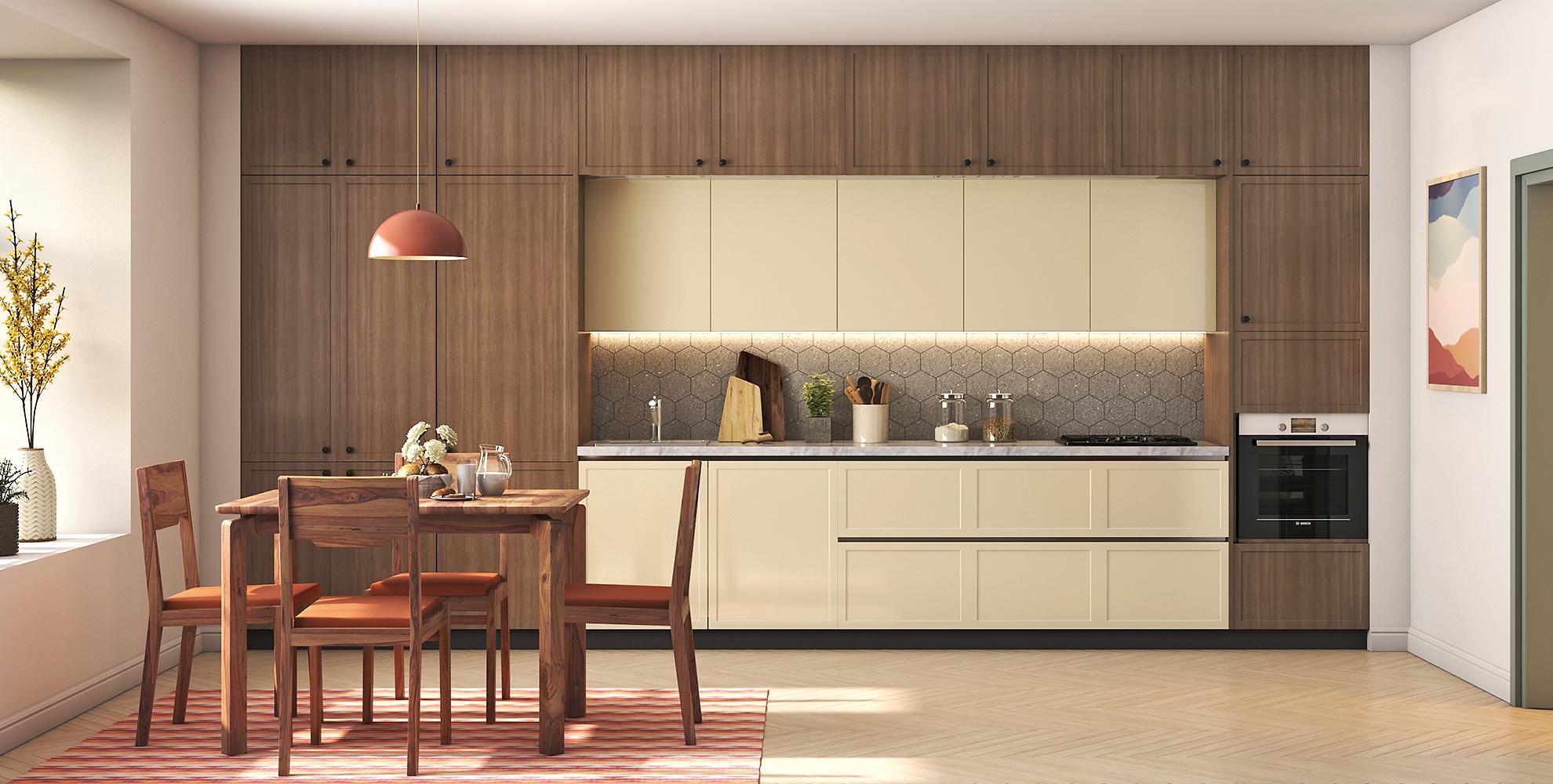
Small Modular Kitchen Design Ideas for Indian Homes (Complete Planning Guide)
Indian kitchens are evolving rapidly — but space constraints remain constant. Most urban homes operate within compact kitchen footprints that must still accommodate daily cooking, storage for bulk groceries, appliances, and multi-user workflows.
A well-executed small modular kitchen design is therefore not about shrinking a standard kitchen — it is about intelligently rethinking layout, storage architecture, material strategy, and movement patterns to suit compact environments.
At Reedify Modular, compact kitchens are engineered as precision-built modular systems rather than site-assembled cabinetry. This factory-driven approach ensures dimensional accuracy, predictable installation, and consistent finish quality across projects.
This pillar guide explores the most important design principles, layouts, materials, and planning frameworks that define successful small modular kitchens today.
Understanding Small Modular Kitchen Design in Indian Context
Compact kitchens in India must respond to unique functional realities:
-
Multi-dish meal preparation
-
Storage for heavy utensils and cookware
-
High moisture and oil exposure
-
Shared usage across family members
-
Limited ventilation in apartments
Because of these conditions, successful compact kitchen design depends less on visual styling and more on spatial intelligence.
Core design philosophy for small kitchens
Space defines layout
Layout must respond to physical constraints rather than aesthetic preference.
Workflow defines storage
Storage placement should mirror cooking sequence.
Verticality defines capacity
Height utilization compensates for limited floor footprint.
This framework ensures compact kitchens remain efficient rather than restrictive.
Key Planning Principles for Compact Modular Kitchens
1. Establish a clear functional triangle
The sink, cooking hob, and refrigerator should form a logical workflow loop that minimizes unnecessary movement.
2. Prioritize drawer-based storage
Deep drawers provide better accessibility than traditional shelf cabinets, particularly in lower units.
3. Extend cabinetry to ceiling height
Ceiling-height cabinetry increases storage volume while visually elongating the kitchen.
4. Eliminate dead corners
Corner accessories transform unusable zones into functional storage.
5. Maintain circulation width
Even compact kitchens should preserve minimum movement clearance for comfort.
Applying these principles early prevents expensive design compromises later.

L Shaped Small Modular Kitchen Design
Among all compact layouts, the L shaped small modular kitchen offers the most balanced combination of usability and spatial openness.
Layout advantages
-
Efficient use of corner geometry
-
Natural division between preparation and cooking zones
-
Open entry improving spatial perception
Functional zoning strategy
Typically, one leg accommodates wet operations such as sink and cleaning activities, while the other supports cooking and preparation functions.
Adaptability
L-shaped kitchens transition easily into open-plan concepts and support breakfast counters without altering structural planning.
For many Indian apartments, this layout represents the most practical starting point.
U Shaped Modular Kitchen Design
A U shaped modular kitchen design provides maximum working surface and storage capacity within compact footprints.
Why U-shape performs strongly
-
Three independent work surfaces
-
High storage density across base and wall units
-
Clear activity zoning
Spatial requirement
The layout performs best when adequate central walkway clearance exists, ensuring comfort during multi-user usage.
Workflow efficiency
Users can rotate within a compact working envelope rather than moving across the room, significantly improving productivity.
This layout is particularly effective for cooking-intensive households.
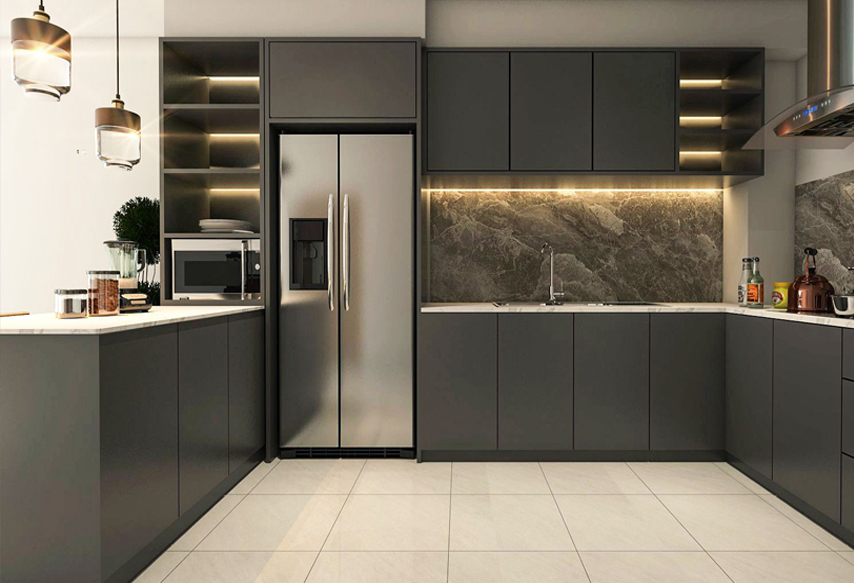
U Shaped Stylish Modular Kitchen Design
When functional density meets material layering, the result is a U shaped stylish modular kitchen design that combines practicality with visual refinement.
Emerging styling strategies
-
Dual-finish cabinetry compositions
-
Open decorative niches breaking visual monotony
-
Integrated lighting enhancing depth perception
Styling within compact kitchens must remain maintenance-aware to preserve long-term usability.
Parallel Modular Kitchen Design
The parallel modular kitchen design, also called a galley kitchen, is often the most honest response to long, narrow kitchen rooms.
Performance advantages
-
Linear storage eliminating corner inefficiencies
-
Clear separation of wet and hot zones
-
Streamlined workflow along corridor axis
Multi-user suitability
Parallel layouts allow simultaneous activity without spatial interference, making them ideal for households with shared cooking responsibilities.
For corridor-shaped kitchens, parallel layouts frequently outperform L or U configurations.

Acrylic Modular Kitchen Design for Compact Spaces
Material selection significantly influences perceived spaciousness. The acrylic modular kitchen design has gained popularity due to its reflective and contemporary surface qualities.
Functional benefits
-
Enhanced light reflection improving visual openness
-
Uniform finish quality
-
Strong color retention over time
Strategic usage
Acrylic surfaces are most effective when balanced with matte or textured finishes to prevent visual fatigue while retaining premium appeal.
Material contrast is often the key to achieving design sophistication within small kitchens.
Storage Architecture for Small Modular Kitchens
Storage strategy determines long-term kitchen usability more than layout alone.
High-performance storage solutions
-
Tandem drawers for cookware
-
Bottle and spice pull-outs
-
Corner carousel mechanisms
-
Tall pantry units
-
Under-sink organization systems
Vertical layering combined with ergonomic drawer planning transforms compact kitchens into high-capacity environments.
Manufacturing Precision in Modular Kitchen Performance
Factory-based production plays a significant role in compact kitchen success.
Benefits of modular manufacturing
-
Dimensional accuracy in tight spaces
-
Pre-tested hardware alignment
-
Reduced on-site modification risk
-
Consistent finishing quality
Precision manufacturing is particularly valuable in compact kitchens where millimeter-level errors can affect usability.
Choosing the Right Small Kitchen Layout
A practical decision framework simplifies layout selection:
-
Narrow room → Parallel layout
-
Corner kitchen → L-shape layout
-
Wider compact room → U-shape layout
-
Premium visual brief → Acrylic-based design
This approach enables scalable design decision-making across projects.
Future Trends in Small Modular Kitchen Design
Emerging trends shaping compact kitchens include:
-
Integrated appliances
-
Handleless cabinetry
-
Smart lighting automation
-
Mixed material palettes
-
High-efficiency storage accessories
These developments indicate a shift toward performance-driven design rather than purely visual upgrades.
Frequently Asked Questions
Is a small modular kitchen suitable for Indian cooking?
Yes. When workflow and storage planning are optimized, compact kitchens can support extensive cooking routines.
Which layout works best for very small kitchens?
Parallel and L-shaped layouts generally provide the highest efficiency.
Do glossy finishes make kitchens look bigger?
Reflective finishes like acrylic enhance brightness and spatial perception.
Can compact kitchens include tall storage?
Yes. Ceiling-height tall units are recommended for maximizing capacity.
How important is factory manufacturing?
Precision production ensures installation accuracy and long-term performance.


Comments
Post a Comment